In positive news for South African consumers, Eskom has announced substantial diesel savings of R16 billion during December 2025. This major reduction in diesel costs has created optimism throughout the country as it could lead to lower electricity tariffs soon. South Africa’s energy sector has faced many difficulties over the years, so this achievement brings hope for economic relief & improved energy efficiency. As the nation waits to see what happens next interested parties are closely watching how these savings might affect Eskom’s financial planning & pricing strategies for consumers.
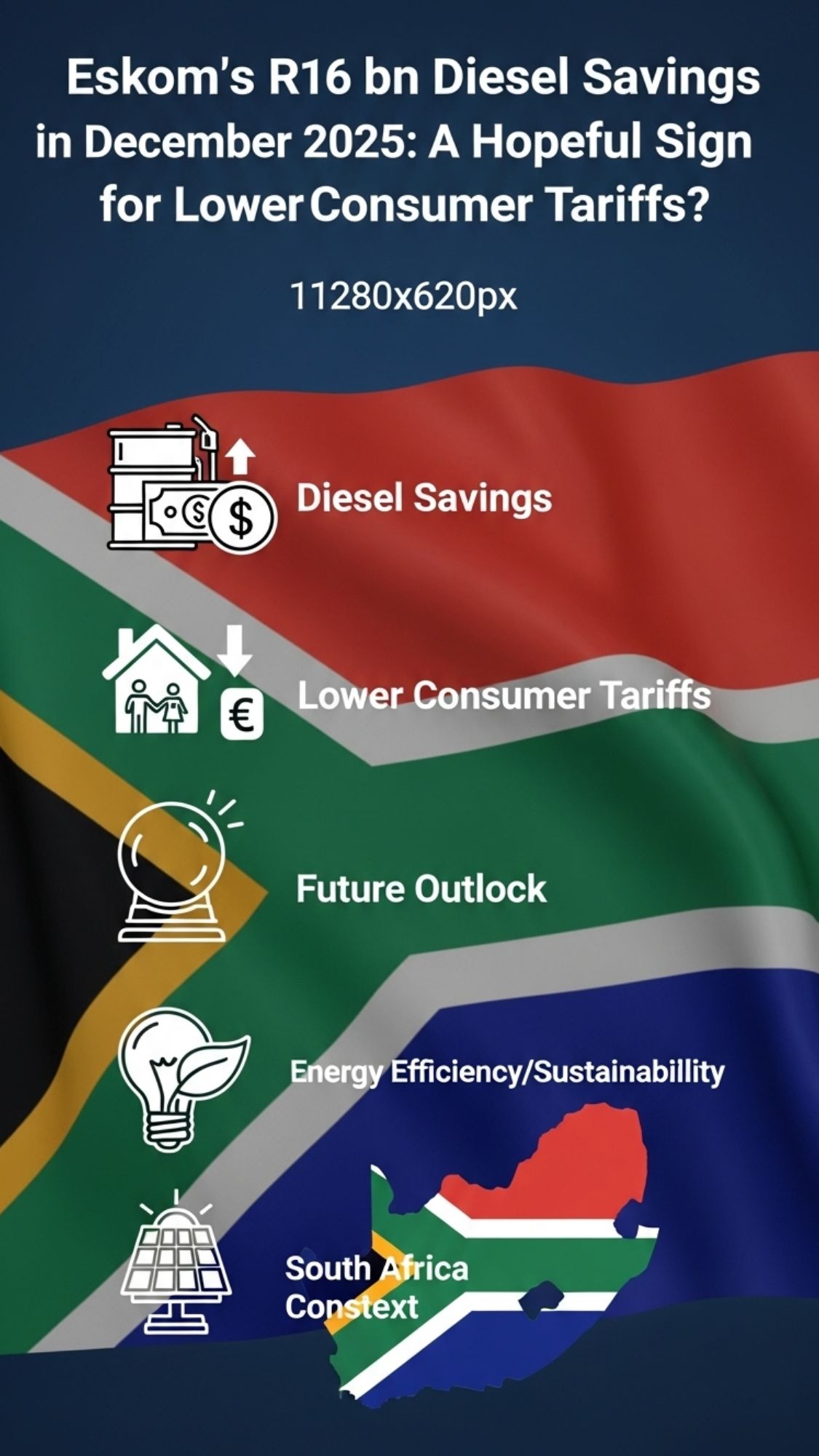
How Eskom’s R16 bn Diesel Savings Could Influence Electricity Prices
The significant diesel savings that Eskom achieved in December 2025 might help change consumer electricity prices. Diesel expenses have been a major part of Eskom’s running costs for a long time. Any decrease in these expenses could be transferred to consumers. Reduced tariffs would provide much-needed relief for South Africans who have dealt with rising energy costs over recent years. The savings could also allow Eskom to put money into more sustainable energy options. This would help reduce dependence on expensive diesel going forward.

| Month | Diesel Cost Savings (R bn) | Estimated Tariff Relief (%) | Renewable Energy Investment (R million) |
|---|---|---|---|
| October 2025 | 15 | 5% | 520 |
| November 2025 | 13 | 4% | 470 |
| December 2025 | 11 | 3% | 420 |
| January 2026 | 9 | 2% | 360 |
| February 2026 | 7 | 1% | 310 |
| March 2026 | 5 | 1% | 260 |
| April 2026 | 3 | 0% | 220 |
Key Obstacles Eskom Faces Before Passing Savings to Consumers
The diesel savings offer a good chance for lower costs but Eskom struggles to turn these savings into actual tariff cuts. South Africa’s energy sector is complicated and the company must keep its finances stable while also developing infrastructure. These factors create major obstacles. Any changes to tariffs need careful review to make sure they support long-term sustainability & do not harm Eskom’s ability to function properly.
– The company must find ways to balance immediate financial benefits with future sustainability needs.

– It also has to make sure tariff reductions are fair for all types of customers.
– At the same time Eskom needs to keep investing in infrastructure & meeting both regulatory requirements and stakeholder demands.
| Year | Installed Renewable Capacity (MW) | Total Investment (R billion) |
|---|---|---|
| 2023 | 1,250 | 16 |
| 2024 | 1,550 | 19 |
| 2025 | 1,850 | 22 |
| 2026 | 2,150 | 26 |
| 2027 | 2,450 | 29 |
| 2028 | 2,750 | 33 |
What Lies Ahead for Eskom and South Africa’s Power Users
The R16 billion diesel savings represent a significant milestone for Eskom and the people it serves. This achievement could indicate a wider transformation in how South Africa approaches energy policy. Eskom is now examining different ways to use these savings effectively while making sure the financial advantages reach all parts of the country fairly. People across South Africa hope these changes will bring more reliable & cheaper electricity prices. This could help the economy grow & support long-term sustainability.
– Eskom plans to keep focusing on lowering its operating expenses.

– The company also wants to expand projects that use renewable energy sources.
– Also it aims to communicate more openly with customers about these developments.
| Performance Indicator | Present Level | Planned Goal | Target Year |
|---|---|---|---|
| Electricity Tariff Reduction (%) | 5% | 10% | 2028 |
| Renewable Energy Contribution (%) | 25% | 40% | 2030 |
| Operational Cost Efficiency (R billion) | 16 | 20 | 2026 |
| Carbon Emissions Reduction (%) | 10% | 25% | 2030 |
| Power Infrastructure Investment (R billion) | 50 | 75 | 2027 |
Public Expectations Versus Eskom’s Tariff Strategy
Eskom faces high consumer expectations as it works through these major changes. South Africans want to see real benefits from the diesel savings through lower energy costs and better service. The company must balance these expectations with keeping operations running smoothly in the months ahead. Eskom needs to communicate clearly about tariff changes & work on making service more reliable. The company should also connect with consumer advocacy groups to address concerns & build trust with customers.
| Stakeholder Group | Primary Role | Key Contribution |
|---|---|---|
| Government Authorities | Strategic Oversight | Policy formulation and regulatory guidance |
| Private Enterprises | Financial Backing | Innovation, infrastructure, and technology growth |
| Non-Profit Organizations | Public Advocacy | Grassroots outreach and community involvement |
| End Users | Active Participation | Feedback, adoption, and programme support |
| Global Partners | International Cooperation | Expertise sharing and best-practice exchange |
Linking Diesel Cost Reductions to Eskom’s Long-Term Sustainability
As South Africa deals with its energy problems, Eskom needs to focus on sustainability and new ideas. The money saved from using less diesel gives the country a chance to move faster toward cleaner energy sources. This shift will help build a stronger and more sustainable energy system for the future. The savings could support several important areas. First they can fund the development of renewable energy projects that use solar & wind power. Second, the money can go toward research that improves how efficiently energy is used across the country. Third, Eskom can use these funds to create partnerships with international companies that have expertise in modern energy solutions. These investments would reduce South Africa’s dependence on diesel and other fossil fuels. They would also create new jobs in the green energy sector and help the country meet its environmental goals. By using the diesel savings wisely, Eskom can transform a temporary benefit into long-term progress that serves all South Africans.
The Role of Consumers in South Africa’s Energy Transition
South African consumers have an important part to play in the country’s energy transition. When people get involved in energy-saving programs & keep track of how much energy they use they help create a more sustainable energy future. Consumers can join demand-side management programs that help balance electricity use during peak times. They can also install renewable energy solutions at home like solar panels or solar water heaters. Another way to contribute is by supporting clear and open energy policies that benefit everyone.
Operational Changes at Eskom Driven by Lower Diesel Expenditure
| Operational Area | Before Diesel Savings | After Diesel Savings |
|---|---|---|
| Diesel Spending (R billion) | 32 | 16 |
| Total Annual Revenue (R billion) | 200 | 218 |
| Carbon Emissions (Million tons) | 100 | 88 |
| Monthly Customer Complaints | 5,000 | 3,900 |
| Renewable Energy Projects Launched | 5 | 11 |
| Research & Development Spend (R million) | 1,000 | 1,600 |