
Canada’s Tax-Free Savings Account has been a flexible and popular tool for people who want to save money. Starting in 2026 the CRA will enforce stricter penalties to stop misuse and prevent people from contributing too much. These changes will impact everyone from casual savers to active traders so it matters that you understand the new rules before they take effect. Here is a breakdown of what the 2026 TFSA changes involve and who will be affected by them. It also covers how penalties will work and what steps you should take to follow the rules. The TFSA was introduced to help Canadians save without paying tax on their investment growth. Over the years some people have used the account in ways that go beyond its original purpose. The CRA noticed patterns of day trading & frequent buying and selling that look more like running a business than saving for the future. The 2026 update is meant to address these issues while keeping the account useful for regular savers. The new penalty structure focuses on three main areas.
What the TFSA Is Meant to Be
The TFSA was designed to help Canadians save and invest without paying tax on what they earn. You can hold stocks or GICs or ETFs or high-interest savings accounts inside your TFSA and all the money you make stays tax-free. The CRA has been watching the program more closely because many people are not using it correctly. They have seen problems with day-trading and too many transactions and risky investments & people putting in more money than allowed. Because of these issues the CRA is planning new compliance rules that will start in 2026.

Why the CRA Is Updating TFSA Rules in 2026
The CRA wants to achieve several goals with the 2026 updates.
– First they aim to create better balance between people who save occasionally & those who trade frequently.
 Canada Lines Up 6 CRA Payments Before Christmas 2025 - Revised Deposit Dates and Updated Timelines
– Second they want to stop repeated patterns of putting in too much money.
– Third they plan to limit trading activities that look like running a business rather than personal investing.
Fourth they intend to increase oversight when accounts are obviously being used in ways that were not intended. These changes are not designed to limit regular investing activities. They focus on actions that go beyond what the TFSA was created for as a personal savings tool.

The New Penalty Structure Starting in 2026
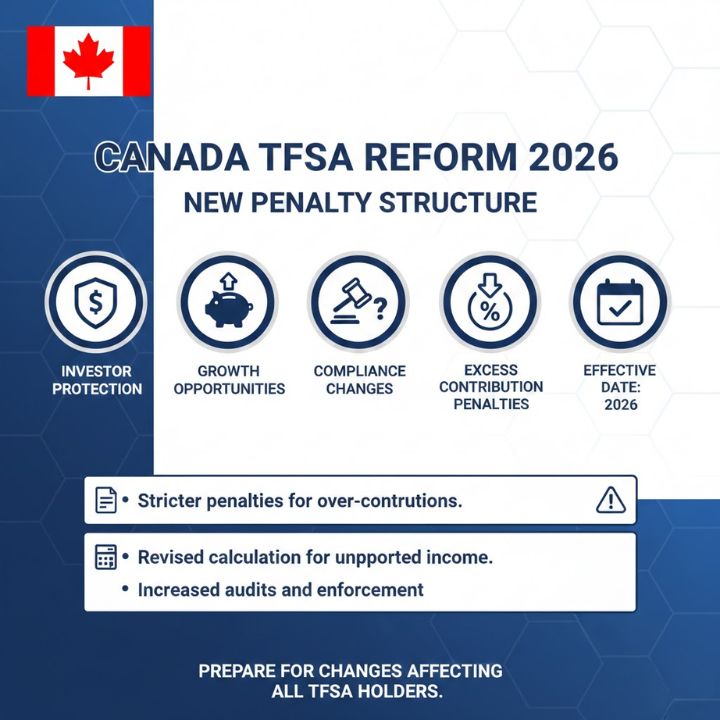
Canadians will face tougher penalties for putting in too much money, not reporting income that counts as business activity and not fixing TFSA problems quickly enough.
Here is what changes in 2026:
Penalties for Contributing Too Much Get Tougher Right now excess contributions are taxed at 1 percent each month until you take the money out. Under the 2026 rules the penalty will go up for people who do it more than once. First time: 1 percent each month Second time: up to 2 percent each month Repeated misuse: CRA may block your TFSA contributions for that year This is meant to stop people who knowingly go over their limit again and again.
CRA Will Proactively Flag Suspicious TFSA Activity
Accounts with unusually high returns or frequent same-day trading or large-scale leveraged activity will now be reviewed faster than in the past. Indicators of potential business activity include multiple trades per day & trading strategies based on short-term price movements and use of borrowed funds to grow the TFSA & high turnover trading patterns. If the CRA decides the TFSA is being used like a business then profits may be taxed fully & even retroactively.
Intentional Misreporting Will Lead to Additional Fines
The CRA can impose penalties if someone intentionally conceals contributions or manipulates account transfers or tries to move funds between institutions to avoid limits. The penalties may include administrative fines or frozen contribution room or back taxes on growth inside the account. These measures strengthen existing rules through more rigorous enforcement.
What Your Contribution Room Looks Like in 2026
The TFSA contribution limit for 2026 is expected to rise because of inflation. The government will announce the exact amount at the end of the year but experts predict it will be somewhere between $6500 & $7,000. For people who have been eligible to contribute since the TFSA program started in 2009 the total amount they can put in over their lifetime should go past $100,000 by 2026. When the limits go up it becomes easier for Canadians to accidentally contribute too much if they are not keeping track of their contributions. This can result in penalty fees from the government.
Who Will Be Most Affected by the 2026 TFSA Changes
Who Will Be Affected Most by the New Rules The updated regulations will not affect everyone equally.
Active Day Traders

People who make several trades each day or use advanced investment techniques will face increased scrutiny. The same applies to anyone whose account shows unusually large gains.
People Managing Multiple TFSA Accounts
Canadians who move money between different financial institutions often lose track of their available contribution space. This makes accidental over-contributions more likely.
Those Near Their Maximum Contribution
The CRA plans to enforce limits more strictly. Even small overages of a few dollars will now trigger penalties.
Previous Violators
Anyone who has been penalized before will automatically receive harsher fines for future violations.
How Canadians Can Avoid Penalties Under the New Rules
Even with the stricter structure avoiding penalties is straightforward if you manage the account properly.
To stay compliant
you should check your TFSA room through CRA My Account & track your contributions across all financial institutions. You should avoid high-frequency trading and not treat TFSA activity like a business. It is important to correct excess contributions immediately and keep records of all transfers and investments. Most Canadians who use the TFSA for standard investing will see no change in their day-to-day usage.
How Business Activity Will Be Judged
The CRA will keep applying the same standards from past audits when deciding if TFSA profits count as business income. The factors they look at include your level of experience and expertise in investing. They consider how much time you spend managing your investments. The use of borrowed money for trading matters. They examine whether your profits are consistent over time. They also review how often you make transactions. If your investment activity looks like day trading the CRA can tax all your TFSA earnings.
Preparing for the 2026 TFSA Changes
Canadians have enough time to prepare before the new compliance rules begin. The smartest thing to do is check your TFSA activity right now and fix any problems before 2026 arrives. Here are three steps to get ready: Look at your contribution records going back to January 2023. If you trade frequently then cut back on how often you buy and sell. Figure out your 2026 contributions ahead of time so you don’t accidentally go over the limit. Making small changes today can help you avoid expensive penalties down the road.The TFSA continues to be one of the best financial tools that Canadians can use. The 2026 changes do not reduce its value. These updates simply highlight that the account should be used for its original purpose as a place to save and invest money over time rather than as a way to run a trading business. When you know how the new penalty system works and make sure your contributions stay within the allowed limits you can keep growing your money tax-free without worrying about fines or audits. The new rules are designed to protect regular savers while making sure the TFSA program stays fair and works well for everyone who uses it. If you use your TFSA the right way the 2026 updates will probably not change how you save your money.