
Singapore’s Central Provident Fund (CPF) functions as the primary retirement planning system for citizens and permanent residents. Understanding CPF withdrawal rules is essential for maintaining financial security during retirement. While retirement and re-employment ages will rise in 2025, the CPF withdrawal age remains unchanged. This provides workers with additional flexibility in managing their long-term savings.
CPF Funds Access Timeline Explained for Members
CPF members can take out their money when they turn 55 under normal circumstances. In some special situations you might be able to withdraw earlier if you become permanently disabled or if you leave Singapore for good. You need to know how the system handles your Ordinary Account & Special Account balances before you reach 55 because these rules affect the amount you can actually withdraw.

New Retirement and Re Employment Age Changes in 2025
Starting in 2025 Singapore will raise the official retirement age to 64 years old and the re-employment age to 69 years old. These changes aim to help people work for more years so they can save more money before stopping work. However the CPF withdrawal age remains at 55 years old. This means members can take out some of their savings when they turn 55 even if they continue working beyond the new retirement age.
Understanding the CPF Retirement Sum Structure
When CPF members turn 55 years old the system creates a Retirement Account for them. Money from their Ordinary Account and Special Account moves into this new Retirement Account until it reaches the Full Retirement Sum amount. Any money above the Full Retirement Sum can be taken out as cash. The money that stays in the account will provide monthly payments starting from age 65. This system helps members have regular income after they retire.

What You Can Withdraw After Turning 55
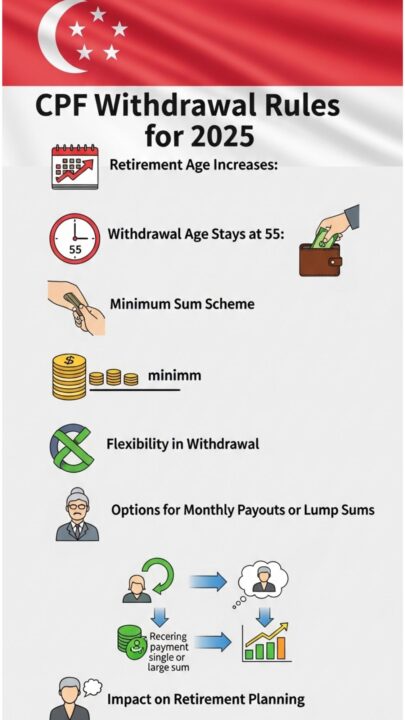
Your withdrawal amount at age 55 depends on two main factors. The first factor is how much money you have saved in total. The second factor is whether you own a property that you can use as security. When you pledge your property to the scheme you become eligible to withdraw a larger sum of money in cash form. This arrangement gives you more financial flexibility compared to not pledging any property. The table below shows the various withdrawal options available. Each scenario differs based on your savings amount and property ownership status. You can review these options to understand what withdrawal amount applies to your specific situation. Different combinations of savings levels and property pledging result in different maximum withdrawal amounts. The table makes it easier to identify which category you fall into and what you can expect to receive.
| Scenario | Withdrawal Rules |
|---|---|
| Savings exceed the Full Retirement Sum (FRS) | Any amount above the FRS may be withdrawn as cash. |
| Savings meet the Basic Retirement Sum (BRS) with a property pledge | A partial cash withdrawal is allowed, depending on the pledged property value. |
| Savings are below the Basic Retirement Sum (BRS) | Cash withdrawal is not permitted; the savings stay in CPF for future payouts. |
Smart CPF Planning for Long Term Financial Stability
CPF savings form the basis for financial freedom when you retire. Members need to think about their future income needs before taking out any money. The CPF Board provides online tools such as the CPF Retirement Calculator to help plan withdrawals and payouts. Good financial planning ensures you stay comfortable and secure during your retirement years.