
– Singapore commits S$37 billion to RIE2030 for the next five years.
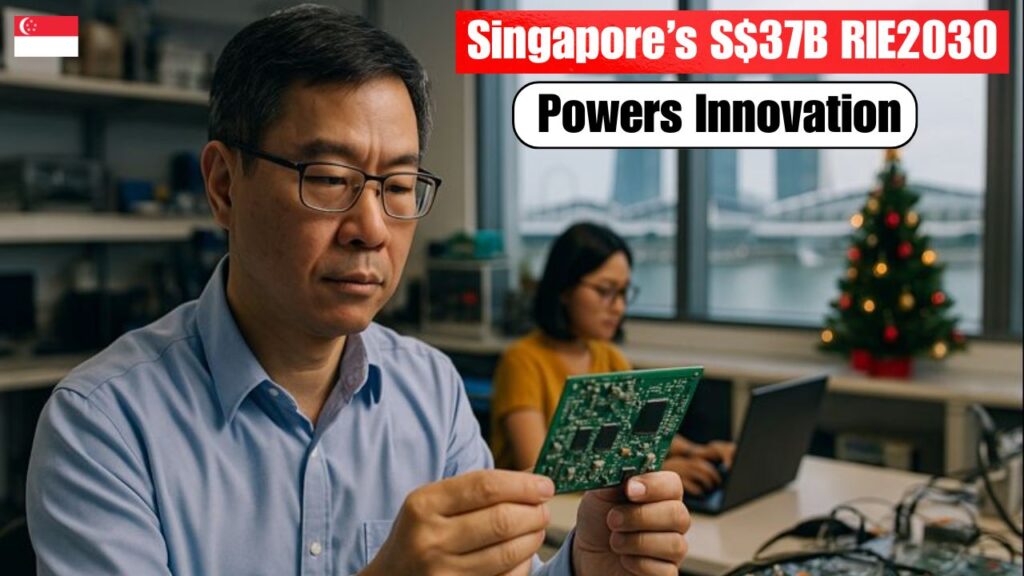
– Over S$3 billion goes to new semiconductor and active ageing research programmes.

– The move strengthens economic resilience & boosts long-term innovation capacity.
Singapore just announced one of its biggest research investments in years. If you have been feeling the impact of rising costs or wondering how Singapore will stay competitive from Jurong East to Pasir Ris this new RIE2030 plan gives a clearer picture of where the country is heading. The government has committed S$37 billion over the next five years to boost science, technology and innovation. That represents a massive step up from the previous plan & shows how seriously Singapore is taking issues like the semiconductor race and the rapidly ageing population. Before we dive into the full breakdown, here is a quick glance at what is inside.
 Canada Lines Up 6 CRA Payments Before Christmas 2025 - Revised Deposit Dates and Updated Timelines
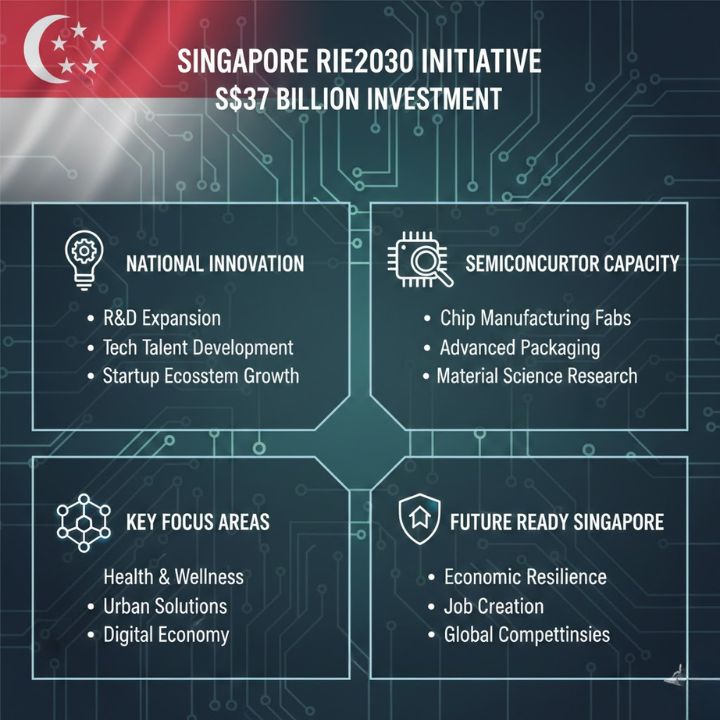
Singapore’s RIE2030 Budget at a Glance: A Quick Financial Snapshot
| Category / Programme | Budget Share | Key Focus Areas |
|---|---|---|
| Four Strategic Domains | S$10.8B (29%) | Advanced manufacturing, healthcare innovation, sustainability solutions, and the digital economy |
| Foundational Research | 24% | Long-term scientific advancement and deep-tech discovery |
| Innovation & Enterprise | 20% | Commercialisation, research translation, and startup ecosystem development |
| White Space Initiatives & Infrastructure | 17% | New research programmes, future-oriented projects, and national facilities |
| Talent Development | 10% | Building local research capability and attracting global scientific talent |
| New Flagship & Grand Challenge Areas | S$3B | Semiconductor leadership and Active Ageing innovation |
A Major Leap Forward: RIE2030 Boosts National R&D Funding by 32%
RIE2030 represents more than just an extension of the previous plan. The initiative brings a 32% funding boost and focuses more deliberately on sectors that will shape Singapore’s economic future. Four key areas will now oversee their own innovation processes: manufacturing human health, urban solutions and smart nation. This structural change allows concepts to transition from laboratory research to practical testing more quickly, which addresses a common request from both local small and medium enterprises and multinational corporation partners. Officials noted that despite ongoing global tensions, multinational companies continue to invest in Singapore’s research and development sector. Collaborative opportunities have actually increased due to the country’s political stability and skilled engineering workforce.

Semiconductor Powerhouse Vision: How RIE2030 Strengthens Chip Innovation
One of the two major new programmes under RIE2030 is the Semiconductor Flagship. Singapore wants to cement its role as a key node in the global supply chain especially now that chips are seen as a security priority worldwide. The programme will build advanced capabilities in packaging and photonics and integration.
– It will tighten research & development alignment with industry demands & grow home-grown tech companies.
– The programme will also strengthen the engineering talent pipeline.
– Global semiconductor revenue is expected to hit one trillion to one point three trillion Singapore dollars within the next five years mainly due to artificial intelligence chips & memory technologies.
Singapore is positioning itself to ride that wave especially after securing over eighteen billion Singapore dollars in semiconductor investments in the last two years.
Tackling the Future: Singapore’s Grand Challenge on Ageing & Long-Term Health
– The second major programme focuses on active ageing.
– By 2030 one in four Singaporeans will be 65 or older.
– We’re living longer but the last decade of life is often when frailty and chronic conditions develop.
– The new Ageing Grand Challenge aims to understand long-term trends in Singapore’s senior population and study biological genetic & lifestyle factors that drive decline.
It will test new healthy-ageing solutions quickly and turn research into preventive practices for everyday life.
Beyond Semiconductors: How RIE2030 Allocates the Remaining Billions
The remaining RIE2030 funds continue to support the four main domains, each playing a crucial role in Singapore’s economic resilience and daily life.
Driving Growth: Advancements in Manufacturing, Trade & Global Connectivity
The remaining RIE2030 funds will continue to support four main domains that are essential for Singapore’s economic strength & everyday operations.
– Manufacturing Trade & Connectivity This area will receive investments in next-generation semiconductors and supply chain technologies.
– Funding will also go toward robotics & automation systems along with AI technologies.

– Emerging sectors like the space economy and bioeconomy will get support as well.
– Human Health & Potential This domain covers precision medicine and biomanufacturing.
– It includes research on disease prevention & childhood cognitive development.
– Studies on skills learning across different age groups are also part of this focus area.
Urban Solutions & Sustainability
– The key priorities here are climate resilience and low-carbon technologies.
– Singapore plans to build Centres of Excellence and deploy climate solutions in real-world settings.
– Smart Nation & Digital Economy Singapore aims to strengthen its capabilities in AI and digital trust.
– The focus extends to quantum technology and cybersecurity applications.
– Cross-sector digital deployment will be prioritized along with talent training and partnerships.
Do We Have Enough Talent?
– Officials say Singapore has a strong and competitive research talent base.
– However as programmes expand the need for skilled workers goes beyond just scientists.
– Large projects require engineers and data specialists.
– They also need technologists & experts who can work in labs and field settings.
The RIE2030 plan focuses heavily on developing young local talent. At the same time it aims to attract expertise from around the world.
Measuring Impact: The Metrics That Will Define RIE2030’s Success
Unlike start-ups research cannot be measured solely by commercial returns. Many breakthroughs require years to develop and mature properly. Singapore will evaluate research based on several different criteria. The first consideration is the long-term scientific impact that the work produces. Researchers must also demonstrate meaningful contributions to global knowledge in their respective fields. Another important factor is the practical value that research creates for everyday life and ordinary people. Finally, the assessment includes how industries adopt and implement these research findings over extended periods of time. This approach recognizes that scientific progress follows a different timeline than business ventures. Research institutions need frameworks that account for the gradual nature of discovery and innovation. By using these multiple evaluation standards, Singapore aims to support research that may not generate immediate profits but offers substantial benefits to society and science in the long run.