
SASSA Loadshedding Exemption Free Power for Grant Recipients Starting from 18 December, many South African households will experience a major improvement in their daily lives. The South African Social Security Agency (SASSA) has revealed that registered homes will receive protection from loadshedding through free Eskom power units. This program is designed to help families who depend on social grants by giving them continuous electricity access for their basic needs and better living conditions. Understanding the SASSA Power Relief Program The new initiative targets vulnerable households that receive government assistance.
Understanding the SASSA Loadshedding Exemption Scheme
The SASSA loadshedding exemption scheme is a government program created to help vulnerable households in South Africa. Because of ongoing problems with frequent power cuts the government decided to make sure that families who receive social grants do not suffer from these disruptions. This scheme begins on 18 December and gives registered SASSA beneficiaries free power units so they are protected from scheduled power outages. By focusing on these households the program tries to keep things stable & support economic activities in homes that need continuous electricity. Eligibility for the scheme depends on SASSA registration. Free Eskom power units are given out monthly. The program focuses on reducing how loadshedding affects vulnerable communities. Implementation starts on 18 December across the country. Beneficiaries receive notifications through official SASSA channels. The scheme is monitored to ensure fair distribution and effectiveness. There may be expansion based on early results and feedback.

How the Initiative Will Be Implemented
The SASSA loadshedding exemption program works through cooperation between SASSA and Eskom and local municipalities. SASSA uses its current database to find households that qualify for the program. People who qualify will get messages explaining how to claim their free electricity units. Eskom handles the delivery of these units to make sure they reach registered homes on time. Local municipalities manage the overall process & solve any problems that come up & help residents when needed. SASSA’s database is used to find qualifying households. SASSA and Eskom & local municipalities work together on coordination. Power units are delivered through official channels. The program includes ongoing monitoring & collecting feedback. Beneficiaries receive support and help when they need it.
Benefits of the SASSA Loadshedding Exemption
The loadshedding exemption program provides important advantages for registered SASSA households. The program gives free electricity units to ensure that basic needs like lighting and refrigeration continue working during power cuts. This makes daily life much easier for people who receive these benefits. The program also helps people who run small businesses from their homes because they can keep working even when there are power problems. It makes communities stronger by lowering the worry and tension that comes with unexpected blackouts. Households get continuous access to basic services they need every day. People running businesses from home can keep operating normally. Families experience better living conditions & general wellness. The fear and stress caused by power cuts decreases significantly. Communities become more stable & better able to handle challenges. The program has room to grow & get better in the future.

Implementation Timeline and Key Milestones
| Programme Stage | Timeline | Key Details |
|---|---|---|
| Public Launch | June 2023 | Government formally unveiled the free electricity support initiative |
| Beneficiary Screening | July 2023 | Eligibility checks conducted for registered SASSA grant recipients |
| First Power Credit Rollout | 18 July 2023 | Initial allocation of complimentary electricity units issued to approved households |
| Performance Tracking | August 2023 | Ongoing monitoring, user feedback collection, and system assessments |
| Impact Review & Scale-Up | December 2023 | Evaluation of programme outcomes and consideration of wider implementation |
Eskom Confirms Stage 6 Loadshedding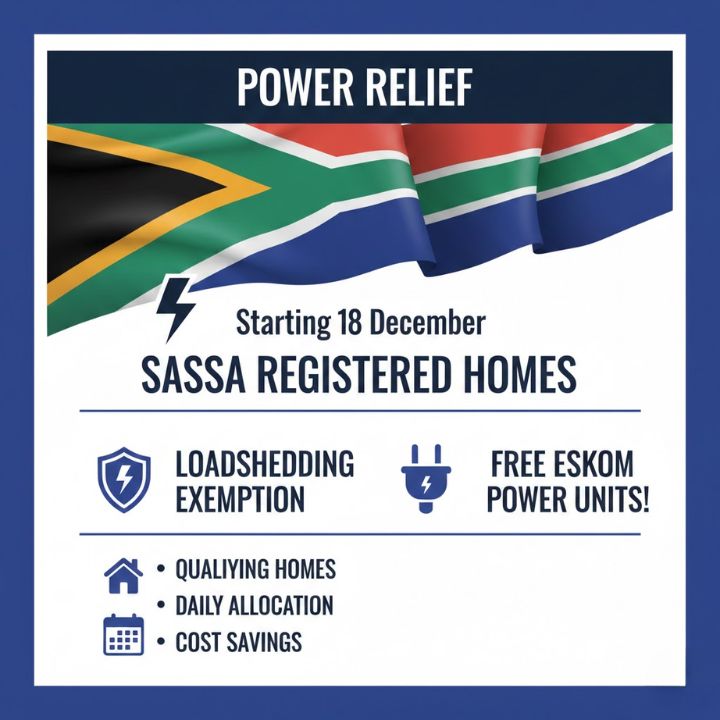
Community Impact and Feedback
 Major Scam Uncovered on 27 December: Urgent Warning for SASSA Beneficiaries with TymeBank Accounts!
The SASSA loadshedding exemption is likely to make a real difference in people’s lives. Initial responses from those who receive benefits show that they are pleased with the change. Many people have said they feel relieved knowing they will have consistent electricity access. This program does more than provide short-term help. It works toward solving larger economic and social problems by making sure all South Africans can count on having power. As the program continues community input will help identify what needs to be improved and where the program might grow. The benefits include better access to dependable electricity & positive feedback from people who receive assistance. The program has potential to tackle broader social and economic challenges. Improvements and growth will be guided by what communities say they need. The initiative also helps communities become stronger and more self-sufficient.
How to Apply for the Loadshedding Exemption
SASSA beneficiaries who want to apply for the loadshedding exemption will find the process quite simple. Households that qualify will get notifications directly from SASSA that explain how to claim their free electricity units. Beneficiaries should read and follow these instructions carefully to make sure they can take part in the program without any problems. All official communication and verification will happen only through SASSA’s authorized channels to protect people from scams & false information. You should check if you qualify by reading the notifications from SASSA. The notification will tell you exactly how to claim your power units. Make sure you only respond to messages that come from official SASSA sources. If you notice anything that seems wrong or suspicious you should report it to SASSA right away. You can also share your experience and suggestions to help make the program better for everyone.
Tracking the Progress of the Initiative
Monitoring how well the SASSA loadshedding exemption works matters for both government officials and people receiving benefits. SASSA and Eskom will share regular information about what is working & what problems come up. People can learn about updates by checking official websites or attending community meetings or following local news. Being open about information helps everyone stay responsible and fix problems quickly. SASSA and Eskom provide regular updates about the program. They share information through their official communication channels. Community meetings and local news sources also cover important developments. This approach keeps stakeholders accountable and helps solve issues when they arise. The organizations maintain ongoing contact with communities. They collect feedback from people to improve how the program runs. The initiative may change in the future based on how well it performs.
Key Considerations for Beneficiaries and Stakeholders
| Key Area | Role of Beneficiaries | Role of Stakeholders | Key Focus Points |
|---|---|---|---|
| Qualification Rules | Must hold an active SASSA registration | Cross-check and validate beneficiary records | Maintain transparency and equal access |
| Information Sharing | Follow verified alerts and updates | Issue accurate guidelines and notices | Avoid confusion and false information |
| Service Distribution | Access benefits through approved channels | Work jointly with Eskom and partners | Ensure smooth and on-time supply |
| Public Feedback | Submit opinions and responses | Review feedback and assess outcomes | Strengthen programme performance |
| Oversight & Tracking | Report delays or system problems | Monitor implementation progress | Resolve issues without delay |
| Future Development | Share suggestions for improvement | Plan sustainable expansion strategies | Increase long-term programme impact |
| Community Participation | Remain informed and engaged | Encourage local dialogue and awareness | Build trust and community cooperation |