
Canada is making major changes to how retirement works across the country. The old system where everyone retired at 65 is being updated with two new federal choices. These updates recognize that people are living longer and costs keep going up while workers have different needs than before. This will impact seniors who are already retired along with people getting close to retirement age & their employers too. Here is everything you need to know about the new retirement choices including how they work and who gets the most benefit from them. This also covers what happens to CPP & OAS payments and what Canadians should get ready for starting in 2026

Why Canada Is Overhauling Its Retirement Framework
Canada’s retirement system was designed during a time when people lived shorter lives and followed more predictable work patterns. Now many Canadians are living into their eighties & a growing number keep working after 65 because they need the money or simply want to stay active. Meanwhile some workers in physically tough jobs or lower-paying positions find it hard to work long enough to build up adequate retirement savings. The federal government created these new retirement options to achieve several goals. They want to give Canadians more freedom to choose their retirement age. The changes aim to ease financial strain on seniors with limited income. They also let older workers who want to continue working earn more money. The adjustments help keep the system viable as the population ages. Finally they bring retirement policies in line with how people actually work today. These updates do not take away the choice to retire at 65. They simply stop treating it as the standard that everyone should follow.


Inside the Two Newly Introduced Federal Retirement Choices
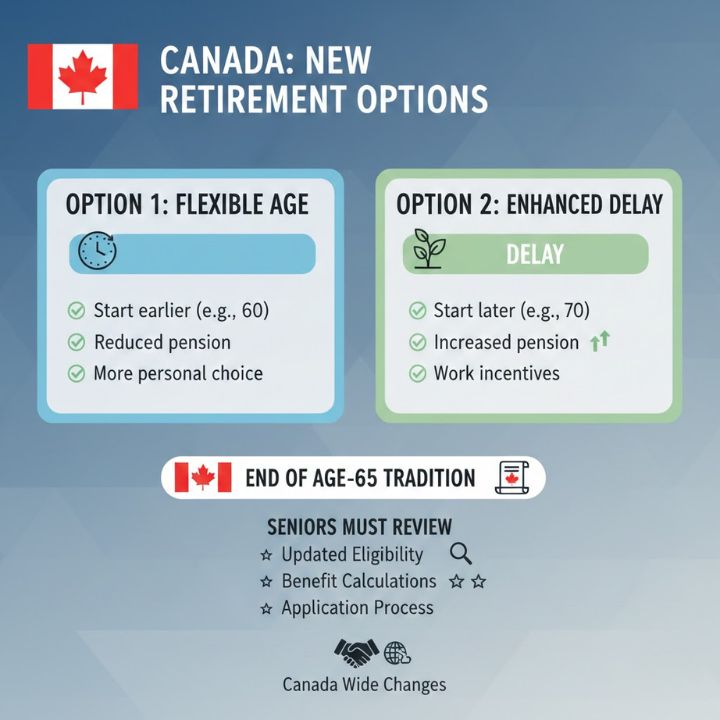
Under the updated model, Canadians who choose to retire before 65 will gain access to a structured early-retirement window. Although early CPP already exists, the new system adds federal safeguards and expands eligibility for support programs.
Key elements include:
 Canada Lines Up 6 CRA Payments Before Christmas 2025 - Revised Deposit Dates and Updated Timelines
A protected early-retirement bracket from ages 60 to 64
Reduced CPP benefits still apply, but with moderated penalties for low-income workers
A new federal low-income supplement for early retirees who qualify
Better integration between early CPP and provincial social programs

This option is designed for workers in physically demanding jobs, Canadians facing health limitations and individuals with unstable employment histories. It gives earlier access to income while reducing long-term penalties that currently push many seniors into poverty.
How the New Retirement Options Reshape CPP Benefits
CPP for Early Retirement Between Ages 60 and 64 The current system cuts your benefits by 0.6 percent for each month you claim before turning 65. The new rules offer smaller penalties for workers who earn low to moderate incomes. If you retire early because of health problems or job loss you might qualify for an extra payment to help support you. CPP for Delayed Retirement Between Ages 66 and 75 Right now your CPP benefits grow by 0.7 percent for every month you wait past age 65. The updated rules might offer better increases once you reach 70. After you turn 65 you can choose whether to keep contributing instead of being required to do so. These updates provide Canadians with more options and fix some of the financial imbalances that were present in the old system.
Which Canadians Stand to Gain the Most
OAS is Adapting to New Retirement Options If You Retire Early (Ages 60-64) OAS payments do not begin until you turn 65. However if you retire before that age you may be able to: – Use the new federal supplement program to cover income gaps – Get help from provincial support programs – Benefit from lower clawback limits when your OAS payments start If You Delay Retirement (Ages 66-75) You have the option to postpone your OAS payments until age 75. When you defer your payments they grow larger each month. Seniors who keep working can also take advantage of updated income testing rules that reduce how much gets clawed back. OAS now offers more flexibility as part of your overall retirement strategy.
The Impact of Retirement Changes on Employers
Canadians who benefit from early retirement include seniors working in physically demanding jobs and workers dealing with health problems. People who earned less money throughout their careers also find early retirement helpful. Long-term caregivers and Canadians experiencing job instability as they approach retirement age are in this group as well. Canadians who benefit from working longer include professionals who earn higher incomes & seniors who have strong benefits from their employers. Self-employed individuals often gain from extended work. Canadians who require larger pensions to support their lifestyle also benefit from delaying retirement. The government aims to build a fair system that works for everyone regardless of their employment background.
Key Steps Canadians Should Take Now
Canadians who benefit from early retirement: Seniors working in jobs that require heavy physical labor tend to gain more from retiring early. Workers dealing with ongoing health problems also find early retirement helpful. People who earned lower incomes throughout their careers often need to access benefits sooner. Those who spent years caring for family members may have limited savings and benefit from early access. Canadians experiencing uncertain employment situations as they approach retirement age also find early retirement advantageous. Canadians who benefit from extended work: Professionals earning higher salaries gain more by working longer since their pension contributions grow substantially. Seniors receiving comprehensive workplace benefits have good reasons to stay employed. Self-employed workers often need additional years to build adequate retirement savings. Canadians requiring larger pension amounts to support their accustomed standard of living should consider delaying retirement. The government aims to establish an equitable system that works regardless of individual employment backgrounds.